Tired of ADHD strategies that don’t work? Here’s what actually does. FREE training here.
February 3, 2026
Many kids aren’t struggling because they lack motivation or discipline. They’re struggling because their nervous systems are overwhelmed.
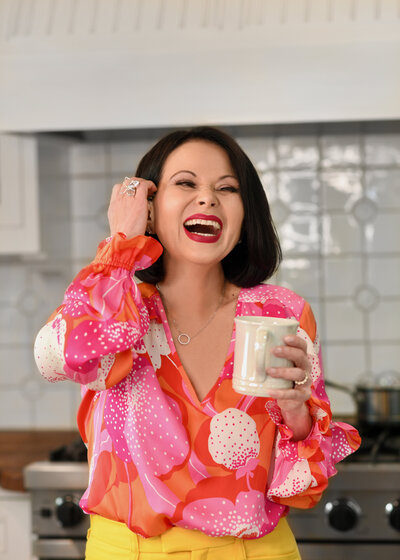
In this episode, Tracy talks with Lyndsay Morris, a former teacher and school counselor diagnosed with ADHD in adulthood, about what actually helps ADHD brains learn and regulate. Lyndsay shares how masking as the “good student” kept her ADHD hidden for years and why school only worked when learning felt engaging. What once looked like boredom, emotional sensitivity, and focus struggles were never a lack of effort.
That realization reshaped her work. After years in classrooms, Lyndsay saw how often dysregulation was treated as defiance and punished instead of supported. Her approach centers on regulation, connection, and reflection as foundational skills, not behavior control, including her Regulate, Connect, Reflect framework and simple nervous system supports like movement and emotional safety.
Tracy and Lyndsay also explore ADHD masking in girls, why adults must regulate themselves before expecting kids to do the same, and what changes when schools stop shaming and start teaching skills. This conversation offers practical, brain-based tools for parents, educators, and adults who want to build capacity rather than compliance.
APPLE
SPOTIFY
YOUTUBE
“College taught me how to write lesson plans, but it didn’t teach me what to do when a student was dysregulated, exhausted, or dealing with trauma.”
- Lyndsay Morris
“We say we want students to focus and connect, but we never actually teach them how.”
- Lyndsay Morris
“It’s our job as educators to deliberately teach the skills of being human.”
-- Lyndsay Morris
"Behavior is always communication. It’s a symptom of something underneath."
-- Lyndsay Morris
"Regulation is about helping the nervous system settle so learning can happen."
- Lyndsay Morris
"Fight, flight, freeze, and fawn are all normal responses. The issue is when we don’t know how to come back to regulation."
- Lyndsay Morris
- Lyndsay shares discovering her ADHD in adulthood after a friend suggested a screener, reframing her academic history and creativity.
- She describes masking as the “good girl,” excelling socially while boredom and inattention went unnoticed in school.
- College and graduate school unlocked her strengths through interest-driven learning, speed, and hyperfocus.
[12:00 – 35:00] From Teaching Content to Teaching Humans
- Lyndsay explains leaving traditional teaching to focus on life skills like focus, connection, and emotional regulation.
- She outlines the Regulate, Connect, Reflect framework and why punishment without skill-building increases shame and dysregulation.
- Tracy and Lyndsay discuss how movement, play, and curiosity are essential for learning, especially for ADHD brains
[35:00 – 01:10:30] Changing Schools by Teaching the Nervous System
- Lyndsay breaks down nervous system dysregulation, fight-flight-freeze-fawn responses, and why behavior is communication.
- She shares data showing large drops in behavior referrals when schools teach regulation and provide wellness spaces.
- The episode closes with practical tools, the impact of teaching adults first, and Lyndsay’s ADHD workaround of calendaring everything.
ADHD isn’t a productivity problem. It’s an identity problem.
That’s why most strategies don’t stick—they weren’t designed for how your brain actually works. Your ADHD Brain is A-OK Academy is different. It’s a patented, science-backed coaching program that helps you stop fighting your brain and start building a life that fits. 👉Learn more here
- Website: generationwellness.com
- Portfolio: lyndsaymorris.com
- Instagram: @lyndsay__morris
- LinkedIn: lyndsaymorris